(A guide to laser hair removal for PCOS, hirsutism and hormonal hair — from Birmingham’s PCOS hair removal specialists 15+ experiences)
If you’ve waxed, plucked, threaded, tried IPL at home, and even paid for laser hair removal somewhere else — and the hair still comes back thick, dark and fast — here’s the reframe we want you to hear first: your hair isn’t the problem, and neither are you. PCOS hair behaves differently at a biological level, which means it needs a treatment approach built for that difference, not a generic package. That’s the gap between “nothing works for me” and actually seeing results — and it’s exactly what we specialise in closing at 369 Laser Clinics, PCOS hair removal specialists in Edgbaston, Birmingham. You can browse our full range of treatments and prices here, or jump straight to get in touch if you’d rather just talk it through first.
Why PCOS Facial Hair Keeps Winning
PCOS raises androgen levels in the body. These hormones push fine, barely-visible “vellus” hairs to transform into thick, dark “terminal” hairs — most commonly showing up as PCOS chin hair, a PCOS beard, or hair along the jawline, upper lip, chest and stomach. It’s biology, not a flaw, and it’s exactly why generic hair removal so often fails: hirsutism hair grows from deeper follicles, is thicker than average, and keeps getting “topped up” by ongoing androgen activity. Shaving and waxing can’t touch the root cause — and they’re also the reason so many people end up battling painful ingrown hairs and dark marks on top of the hair itself.
In other words — if IPL at home did nothing, or a previous laser clinic left you disappointed, that wasn’t a sign your hair is unusually stubborn or “just how it is.” It was a sign the treatment wasn’t matched to how PCOS hair actually grows.
If you’ve been searching “best hair removal for PCOS,” here’s the short answer: methods that target the follicle (laser or electrolysis) outperform anything that only cuts or pulls hair at the surface — because they’re the only options that address why the hair keeps coming back. For a full breakdown of how the treatment works from start to finish, see our complete guide to laser hair removal, and if you’re wondering how it performs on deeper skin tones, we’ve covered that separately in laser hair removal for dark skin.
Ingrown Hairs: Prevention, Products and When Laser Helps
If PCOS hair wasn’t frustrating enough on its own, coarse hormonal hair is also far more prone to growing back into the skin — which is why so many of our clients are searching for ingrown hair removal as much as hair removal itself.
How to prevent ingrown hairs after shaving or waxing: exfoliate gently a day or two beforehand, always shave in the direction of hair growth, avoid tight clothing over the area straight after treatment, and moisturise daily to stop dead skin trapping the hair as it regrows.
Ingrown hair vs razor bump — what’s the difference? A razor bump is usually surface-level irritation that settles within a day or two. A true ingrown hair has curled back under the skin and can form a hard, sometimes painful lump that lasts much longer — this is more common with the thick, curly hair typical of PCOS.
Best products for ingrown hairs: look for gentle chemical exfoliants (salicylic or glycolic acid), fragrance-free moisturisers, and avoid harsh physical scrubs on already-irritated skin, which can make things worse rather than better.
Ingrown hair cyst treatment: if an ingrown hair becomes hard, swollen, or infected (an ingrown hair cyst), please don’t try to treat it at home — see your GP or a dermatologist, since attempting to extract it yourself can cause scarring or infection.
Ingrown hair removal with laser: because laser hair removal reduces hair at the follicle rather than cutting or pulling it at the surface, it’s one of the most effective long-term ways to stop ingrown hairs recurring in the first place — no regrowth, no ingrowth.
Meet Barbara: 15 Years, Harley Street-Trained, PCOS Hair Removal Specialist
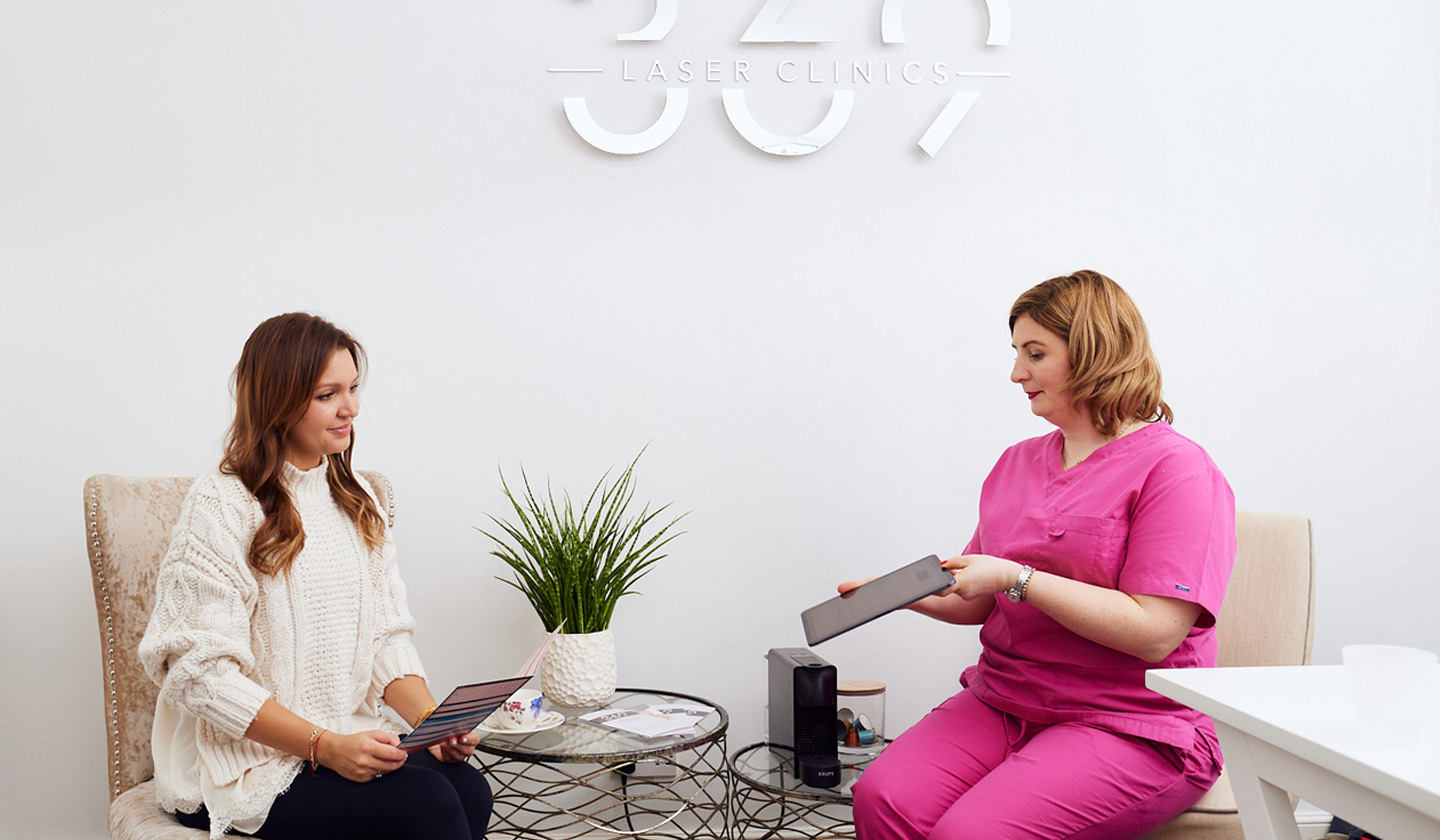
Barbara PCOS hair removal specialist
This is where a specialist makes the difference. Lead therapist Barbara holds a cosmetology degree and is highly trained in laser treatment and paramedical aesthetics, with 15 years’ experience including time at Harley Street in London. She is especially passionate about treating hirsutism and PCOS, and it shows — clients travel across Birmingham specifically to see her rather than booking whichever clinic is closest, because she takes the time to understand why your hair is behaving differently before building your plan. You can read more about Barbara and the wider team on our About Us page.
Is Laser Hair Removal Good for PCOS?
Yes — laser hair removal for PCOS is one of the most effective long-term options available, because it targets the follicle directly rather than just removing hair at the surface. It won’t cure PCOS itself (that’s a hormonal condition, not a hair condition), but it can dramatically reduce how much time, pain and money you spend fighting PCOS facial hair week after week.
Laser vs Electrolysis vs IPL for PCOS Hair — Which Actually Works?
Does laser hair removal work on hormonal hair? Yes — coarse, dark, hormone-driven hair generally responds better to laser than fine, pale hair does, because the follicle holds more pigment for the laser to target. The challenge with PCOS isn’t whether laser works, it’s that ongoing hormone activity can wake up new follicles over time, which is why a tailored session plan matters more than it does for non-hormonal hair.
Laser hair removal vs electrolysis for PCOS: both treat the follicle directly, but they work differently. Electrolysis treats one hair at a time with a fine probe and is the only method officially recognised as “permanent” — but it’s slow, making it impractical for larger areas. Laser treats broad areas quickly and is generally the better first choice for the face, jawline and body; electrolysis is often used afterwards for any stubborn patches laser hasn’t fully cleared.
Electrolysis for PCOS hirsutism can be a good add-on for small, stubborn areas (like a few individual chin hairs) once a laser course is mostly complete, rather than as your only treatment for widespread PCOS hair.
IPL vs laser for PCOS hair: IPL uses broader, less targeted light and is generally less effective on the thick, deep-rooted hair typical of PCOS — it works best on fine, non-hormonal hair. If you’ve tried IPL with disappointing results, that’s often why, not a sign that nothing will work for you.
At-home laser hair removal for PCOS — does it work? At-home devices are far less powerful than clinic-grade laser, so while they may help maintain results between professional sessions, they rarely make a meaningful dent in coarse PCOS hair on their own — which is exactly the “I’ve tried everything and nothing worked” story we hear most often.
What 369 Laser Clinics Does Differently
- Triple-wavelength Diode Xenon XE Pro technology — effective laser hair removal across a wide range of skin tones, not just fair skin with dark hair
- A genuine consultation first — Barbara assesses your skin, hair pattern and history (including previous treatments that haven’t worked) before recommending anything. See our current prices and packages or read how much laser hair removal costs and whether it’s worth it
- A specialist’s eye for hormonal hair — sessions and intervals adjusted for PCOS-pattern regrowth, not a one-size-fits-all package
- A calm, judgement-free space — many clients tell us they were nervous or self-conscious before their first visit, and left feeling completely different
Real Results, Real Words
We don’t need to dress this up — our clients say it best:
“My journey with 369 Laser Clinic has been absolutely amazing… after a decade of trying various other hair removal methods, finding this treatment has helped me feel confident and improved my mental health greatly.” — Siara K., PCOS client (upper lip, chin & jawline)
One client came to us after spending over £1,000 across three previous laser clinics with almost no results on her PCOS chin hair and neck — and saw a visible difference from her very first session with Barbara.
Another described her results after just three underarm sessions as “shocking” — going from shaving weekly to once every four to five weeks.
(You can read our full collection of reviews on Google and Trustpilot, and more client testimonials are featured on our homepage — always keep reviewer names and wording exactly as given, and never edit a review’s meaning.)
Before & After
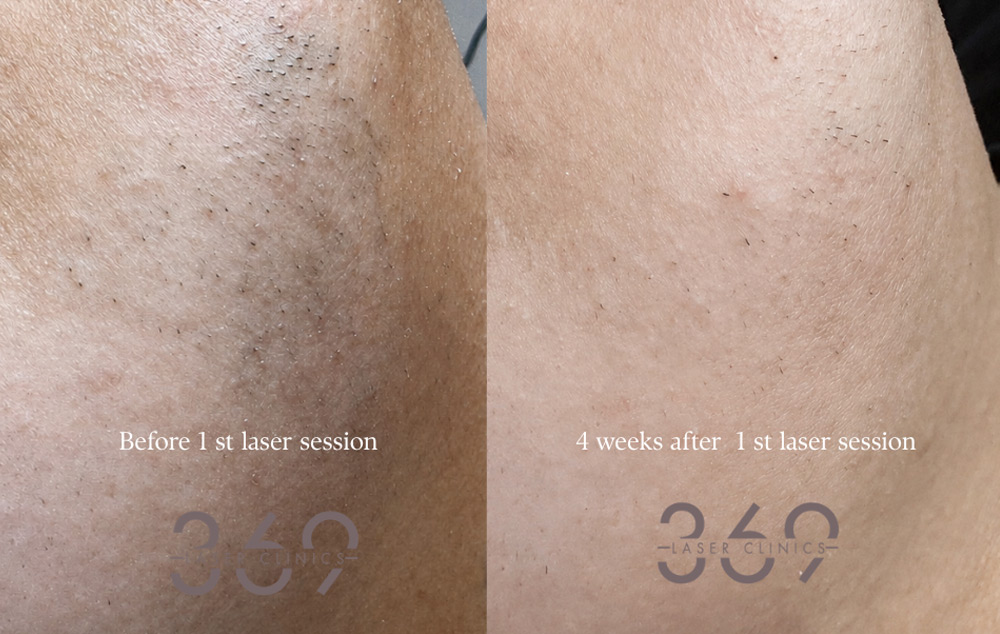
Results like these build across a course of sessions, timed to catch hair during its active growth phase — which is especially important with PCOS, where regrowth cycles can be less predictable than average. You don’t have to wait until the end of a full course to see a difference, either — many clients notice a visible reduction just 4 weeks after their very first session, as shown above. You can see more real client journeys, including full before-and-after photos, in Real People, Real Results: Inside 369 Laser Clinics, or follow along for regular updates on our Instagram.
Quick Questions People Ask Us
Does laser hair removal work for PCOS? Yes, in most cases. Coarse, dark, hormone-driven hair typically responds well to laser because the follicle contains more pigment for the laser to target — though results depend on hair and skin type, which is why a consultation matters.
How many sessions does PCOS hair removal need? Most clients need more sessions than someone without a hormonal condition, because PCOS can keep reactivating follicles. Your plan is built around your own regrowth pattern, not a fixed number.
Is laser hair removal permanent for PCOS? It offers long-term hair reduction rather than a permanent cure, since PCOS is an ongoing hormonal condition. Many clients maintain results with occasional top-up sessions.
What’s the best hair removal for PCOS facial hair? Laser and electrolysis are the two methods that treat the follicle directly. Laser is generally faster for larger areas like the jawline and cheeks; a consultation can help you decide what suits your hair and goals.
A Note on What Laser Can (and Can’t) Do
Laser offers long-term hair reduction, not a permanent cure for PCOS itself. If you haven’t been diagnosed, we’d always recommend seeing your GP first. What laser can do is take the daily burden of shaving, waxing and ingrown hairs off your plate, so you can stop thinking about it every single day.
If you’re also curious about our other treatments, we cover skin concerns like acne, pigmentation and psoriasis in Red Light LED Therapy benefits for skin and scalp conditions, and collagen/texture concerns in our guide to Dermapen microneedling. You’ll find all of our articles on the 369 Laser Clinics blog.
Ready to Try the Right Treatment This Time?
If you’ve been let down before, we’d genuinely love the chance to show you a different experience.
📱 WhatsApp us for an instant response: 07545 976768 — or call/text the same number direct: 07545 976768
Or book your free consultation at 369 Laser Clinics — Birmingham’s PCOS hair removal specialists 93 Hagley Road, Edgbaston, Birmingham B16 8LA 📞 0121 517 1583 · 📱 07545 976768 (WhatsApp/mobile) ✉️ info@369laserclinics.com · ✉️ bookings@369laserclinics.com Mon–Thu 9am–8pm · Fri–Sat 9am–6pm · Closed Sundays
See our prices and packages → · Read more real client stories → · Learn more about Barbara and the team →
This article is for general information and is not medical advice. If you think you may have PCOS, please speak to your GP for diagnosis and management.
Comments are closed.